Request for Proposals: Upstate Forever seeks consultant for GIS mapping and modeling services. Apply by 5:00 p.m. ET on November 6, 2026. Learn more



Start somewhere: One expert's take on invasive plant management
Our Stewardship team sat down with Grant Dallaire of Invasive Plant Control, Inc. to get an inside look at professional invasive plant management, including the techniques contractors rely on, the species that keep them up at night, and how landowners can join the fight.
How did you get into the field of invasive species management?
Growing up, I spent a lot of time outside. This was mostly spent camping, hiking, hunting, and fishing. Towards the end of high school, I knew I wanted to do something involving conservation, so I decided to choose a college based on that. I finally decided I wanted to do something involving invasive species after hearing a guest lecture during a conservation class. Something about the presentation drew my attention, and I just knew I wanted to work with invasive species. From there, I applied to Invasive Plant Control Inc. right before graduation and started working there immediately after.
Tell us a bit about what you do for Invasive Plant Control Inc. What does a typical day look like?
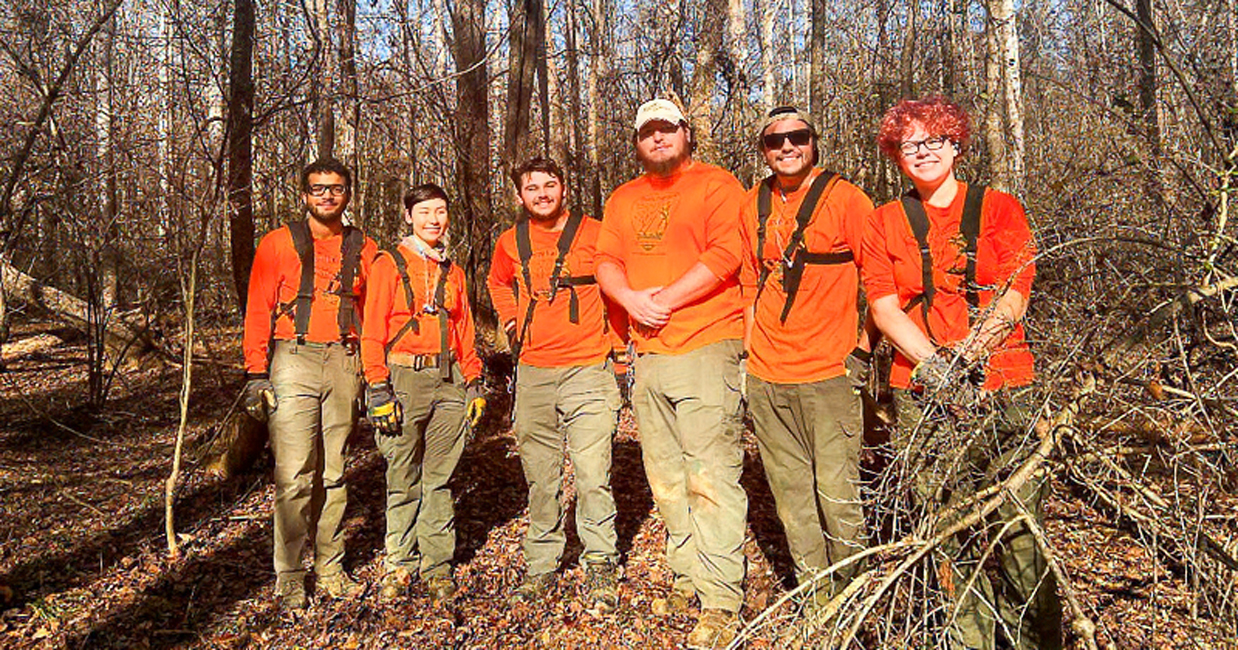
I am a crew leader for Invasive Plant Control, Inc. (IPC). I organize the crews while on-site and work with our clients to make sure that the work is done quickly and thoroughly. I also train new hires for the traveling crew. That includes teaching them a variety of treatment methods and how to identify plants. This training is ongoing, and I try not to overload people with too much information at once. There is lots to learn!
A typical day for me can vary greatly, depending on the project I'm working on and my team's location. It can be as simple as working alongside the crew all day, or a mix of working, training, driving long distances, purchasing supplies, repairing tools, and maintaining positive client interactions. My favorite days are when I work hands-on with the crew.
What are the most common techniques for managing invasive species?
Cut and treat: We typically use this method to treat woody invasives by physically cutting the stem or trunk of the plant completely. This is followed by applying an herbicide to that stump where the plant then uptakes it into the roots and kills it. It is important to note that one could skip the herbicide here but that would not result in the plant dying and may even grow back more vigorously than before.
Foliar spray: This method is one that most homeowners are familiar with. Foliar spray involves applying a lower-concentration herbicide to the leaves or foliage. The plant then uptakes the herbicide through the leaves, ultimately killing it.
Hack and squirt/girdle cut: This method is similar in approach to cut and treat, and we usually use it on much larger woody invasives. We cut through the outer ring of plant tissue to introduce herbicide directly into the cambium layer, which allows the roots to take in the herbicide. The difference between hack and squirt/girdling and cut and treat is that the cuts are made without completely cutting down the tree or shrub.
Mechanical removal: This method is commonly used by landowners who are trying to avoid using herbicide. Invasive shrubs or vines are physically pulled out of the soil by hand or using a tool such as the UPRooter or Weed Wrench, which are designed to remove the entire plant, root and all.
What role do private landowners play in invasive species eradication and management in the southeast?
Homeowners can play as large or small a role as they want. It can be as simple as making sure you aren’t unintentionally planting invasive plants in your yard. As someone in the field of invasive plant management, I would be ecstatic if every homeowner had a better understanding of which commercially available landscaping materials are harmful invasives. Homeowners looking to do more could start removing invasives from their property, educating neighbors and friends about taking invasive plants seriously, or even communicating concerns to an HOA if applicable.
Landowners could get involved in volunteering at local parks or with other organizations that are actively engaged in managing invasive species. Landowners may even organize an effort within their own neighborhood or community to kill privet or whatever invasive species might be present. There are organizations that help people set up these events, such as Weed Wrangle. I have personally helped at one of their events in Nashville and spoke with one of the organization’s founders who explained how they work within communities that are trying to make a positive impact.
Another fantastic option for people is contacting their elected representatives and explaining their concern about invasive species. Hopefully, if enough people express their concern over invasive species, more funding can go to conservation groups to perform large-scale work on invasives.
The hard reality of invasive species is that we will be fighting them for years to come. Every small step helps. In my opinion, it is simply people caring that has one of the biggest impacts. People who care enough to try to learn about the threat that invasive species pose to the local habitats and ecosystems can make a huge impact.
What is the most difficult invasive plant to manage in your experience?
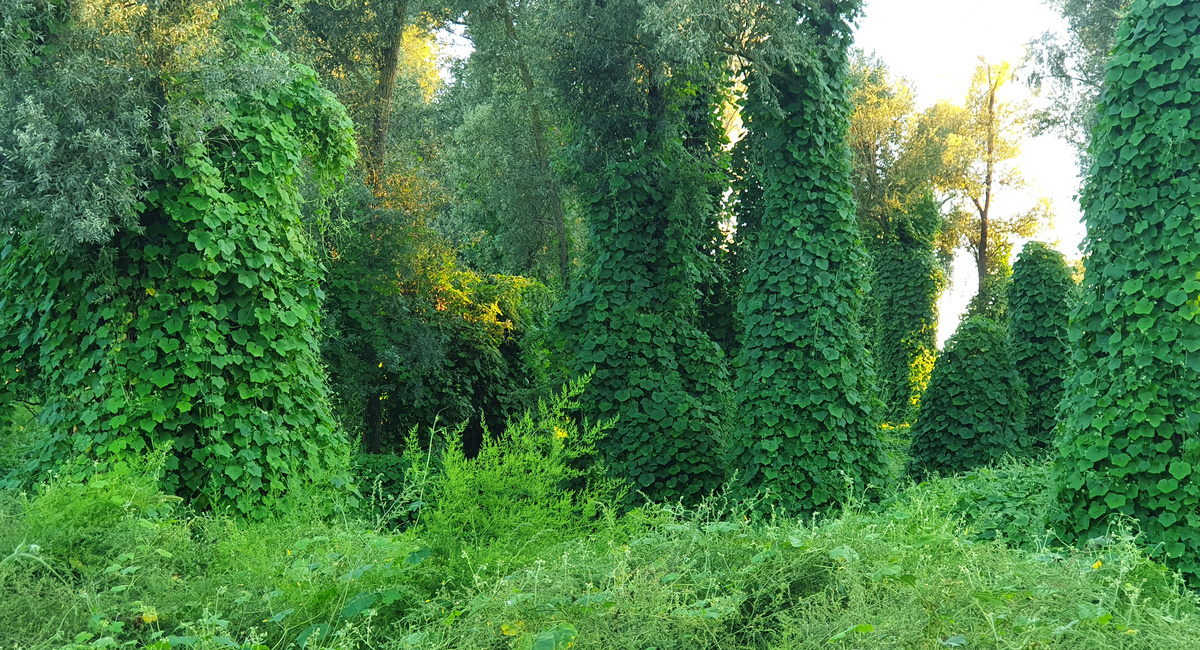
Invasive vines can be the most difficult invasive plants to deal with. Specifically, Kudzu and Wisteria species require a lot of work to kill as they store a lot of energy in their roots, which makes them more challenging to manage. English ivy is another tough one because many landowners plant it in their yards, resulting in a constant source of seeds, and the vines themselves spreading into neighboring areas.
An honorable mention would be any bamboo species because they can grow and spread quickly, making them harder to control.
Any words of advice for landowners looking to manage invasive species on their property?
I’ve spoken with many homeowners over the six years that I’ve worked for IPC, and their impressions of tackling invasive species on their end have been consistent. They usually say something along the lines of how “daunting” the task seems. I have always said more or less the same thing. You just have to start somewhere. You don’t need to dive right in and remove everything in one year. Nature works over the span of years, and you just need to be a little faster than that to beat it.
Upstate Forever's Land Management program provides our conservation easement holders with tools, guidance, and resources to help restore and maintain the ecological health of their land. For more information on combating invasive plant species on your UF conservation easement, contact Director of Stewardship and Land Management Lauren Ulich.
Connect with our team
UF conservation easement holders interested in learning more about active land management and restoration initiatives are encouraged to contact Director of Stewardship & Land Management Lauren Ulich at lulich@upstateforever.org.
Greenville, SC
507 Pettigru Street
Greenville, SC 29601
Spartanburg, SC
900 S. Pine St, Ste 1B
Spartanburg, SC 29302