Request for Proposals: Upstate Forever seeks consultant for GIS mapping and modeling services. Apply by 5:00 p.m. ET on November 6, 2026. Learn more



How development impacts water quality
We are fortunate in the Upstate in that most of us have access to plenty of clean drinking water whenever we need it. In recent years, after the pandemic and destruction wrought by Hurricane Helene, I’ve been even more appreciative of the fact that I have access to clean, reliable water with a turn of the tap.
Water is the single most important resource on the planet. All life as we know it — everything you’ve ever experienced — exists because of water.
And yet, here in the Upstate, it's all too easy to take clean water for granted. It's easy to forget the value of water and the immense role it plays in our daily lives. That is a dangerous mindset, especially as our region grows.
Growth impacts our water
By 2035, our region’s population is projected to reach over 1,750,000 – an increase of 66% since 1990. The real issue, however, is how and where we are accommodating that growth. Antiquated land use policies promote sprawl and fail to protect forests, wetlands, headwater streams, lakes, and rivers. These natural assets are vital to drinking water quality, flood mitigation, outdoor recreation, and economic prosperity.
We cannot stop the growth, but we do still have choices... for the moment. That's why it’s more important than ever to understand how development impacts water, and to work to protect our precious water resources.
How Sprawl threatens water quality
You’ve probably noticed that the Upstate is losing large tracts of land to development. In fact, the Upstate’s paveover rate is equivalent to almost one new Haywood Mall (and its parking lots) every single day.
Sprawling development practices have serious negative effects on our water quality. Flooding, erosion, and pollution are just a few of the woes that come with paving over too many of the natural areas that filter and absorb water.
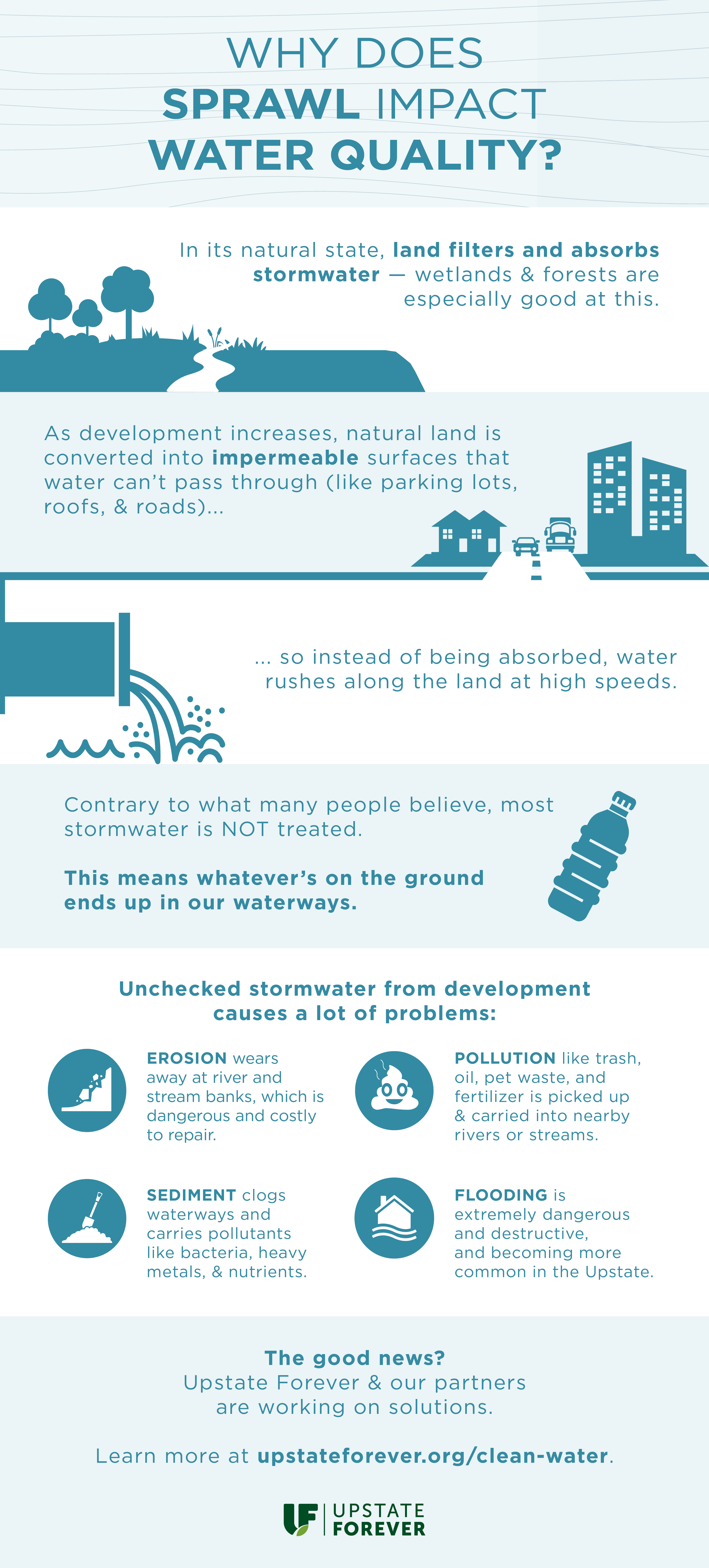
This is especially true for urban waters, which are waterways that run through densely populated areas. They take on large amounts of pollution from a variety of sources including contaminated runoff from residential, commercial, and industrial properties, trash, and untreated wastewater.
So what can we do to reduce these impacts? Fortunately, many groups in the area, including Upstate Forever, are working to safeguard our water through advocacy efforts, sprawl reduction, land management, and land protection.
Show Riparian Buffers Some Love
The best solution is to leave land next to waterways undeveloped. These areas next to rivers and streams — called "riparian buffers" — are natural powerhouses when it comes to filtering pollutants, lessening the impacts of flooding, and safeguarding our drinking water supplies.
When a riparian buffer is impaired, all is not lost! Repairing degraded and eroded streambanks and planting native vegetation helps stabilize them, and it is low cost. In collaboration with Clemson University Cooperative Extension, our Clean Water team has completed two streambank repair projects in Anderson and Greenville counties.
Our Clean Water team also works with landowners to
protected land protects water
Strategic land protection is also a cost-effective way to protect water quality. According to a study by the Trust for Public Land, every $1 spent on land protection saves $27 on water treatment costs, because it keeps our waters clean, naturally, without the need for costly infrastructure upgrades. That's a great return — on any investment.
In this part of the state, most people get their drinking water from surface water, which is essentially water from a local river or reservoir. Currently, the majority of rivers and streams carrying the Upstate's drinking water are not protected. It's essential that we work now to find strategic ways to protect our drinking water sources.
We need your help
The effort to ensure clean, abundant water matters to us all. Here are some things you can you do as a private citizen to help safeguard our water:
- Monitor your local waterways by becoming a citizen scientist through SC’s Adopt-a-Stream program or by keeping a log of what’s happening in your local creek, river, wetland, or lake. Learn more
- Volunteer for a litter cleanup! Upstate Forever hosts volunteer fieldwork days several times a year, which typically include litter pickup, removal of invasives, and/or planting of native species. You can also visit our local partner organizations for more information on litter cleanups in your area: Friends of the Reedy River, Greer CPW, Palmetto Pride, and Lake Hartwell Partners for Clean Water.
- Tell your state representatives that water matters to your community. Our state legislators need to hear from their constituents. It doesn't have to be complicated —a quick call or email gets the message across. Find your state officials
- Tell your local elected officials too! City and County officials often set priorities based on what they hear from their constituents. If protecting green space and water quality are important issues to you, your local officials need to hear that! Consider writing them a letter, sending an email, or picking up the phone to make your voice heard. We've put together a resource to help you at upstateforever.org/local-officials.
- Pay attention to other local city and county council issues and participate when you can. Remember, many policies governing how we manage land, construction, and transportation can impact our local waterways. UF currently offers e-newsletters with updates and alerts related to Greenville, Spartanburg, and Anderson growth issues. Sign up for local growth updates
- Be on the lookout for alerts from UF and our partner organizations. We will let you know when action is needed on issues affecting our water resources. Follow us on social media and sign up for our water issues e-newsletter, The Water Log, at upstateforever.org/email.
Article updated August 2025
Erika Hollis is the Clean Water Director at Upstate Forever and can be reached at ehollis@upstateforever.org.
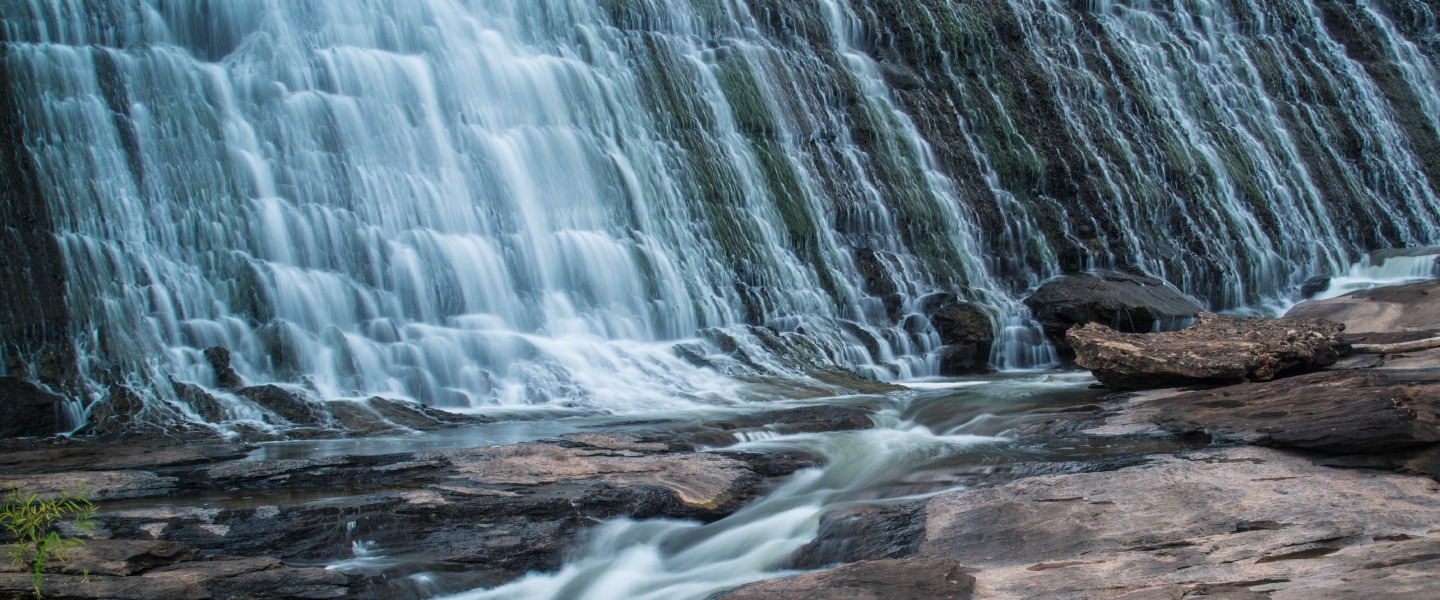
Photo by Tom Blagden
Greenville, SC
507 Pettigru Street
Greenville, SC 29601
Spartanburg, SC
900 S. Pine St, Ste 1B
Spartanburg, SC 29302