Request for Proposals: Upstate Forever seeks consultant for GIS mapping and modeling services. Apply by 5:00 p.m. ET on November 6, 2026. Learn more



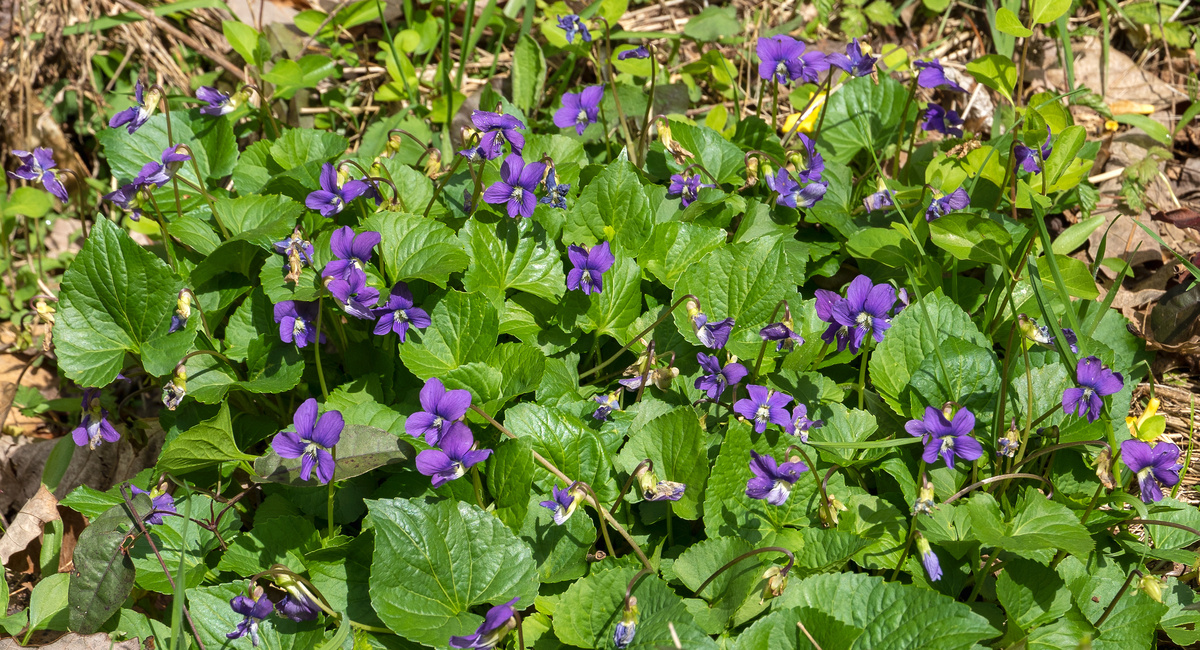
Give these native spring 'weeds' a chance and support local pollinators
The Upstate is home to many native wildflowers often considered weeds. Before you remove them this spring, learn to identify and cultivate them in a more suitable location on your property to support native pollinators and local wildlife.
In the Upstate’s urban and suburban areas, native wildflowers have been given a bad rap as weeds because they can look out of place in manicured lawns or gardens and sometimes self-seed a little too enthusiastically. But with a little care and direction, they can support a thriving ecosystem while you rewild your backyard.
What is a weed, really? The answer depends on who you're asking and the expectations they have for their lawn or garden. Generally, a weed is a plant deemed undesirable in the location where it sprang up. If you don’t like where any of the following natives pop up on their own, then collect their seeds before they drop, remove the parent plants, and sow the seeds elsewhere.
Skip the herbicide and aggressive weeding, and you’ll be pleasantly surprised by the beauty that emerges. Observe these common native wildflowers flourish in our region, where they’ve been adapting for thousands of years, and see what amazing creatures begin inhabiting your lawn or garden. These wildflowers will perform important ecological work for you at no cost!
Clasping Venus's Looking Glass
(Triodanis perfoliata)
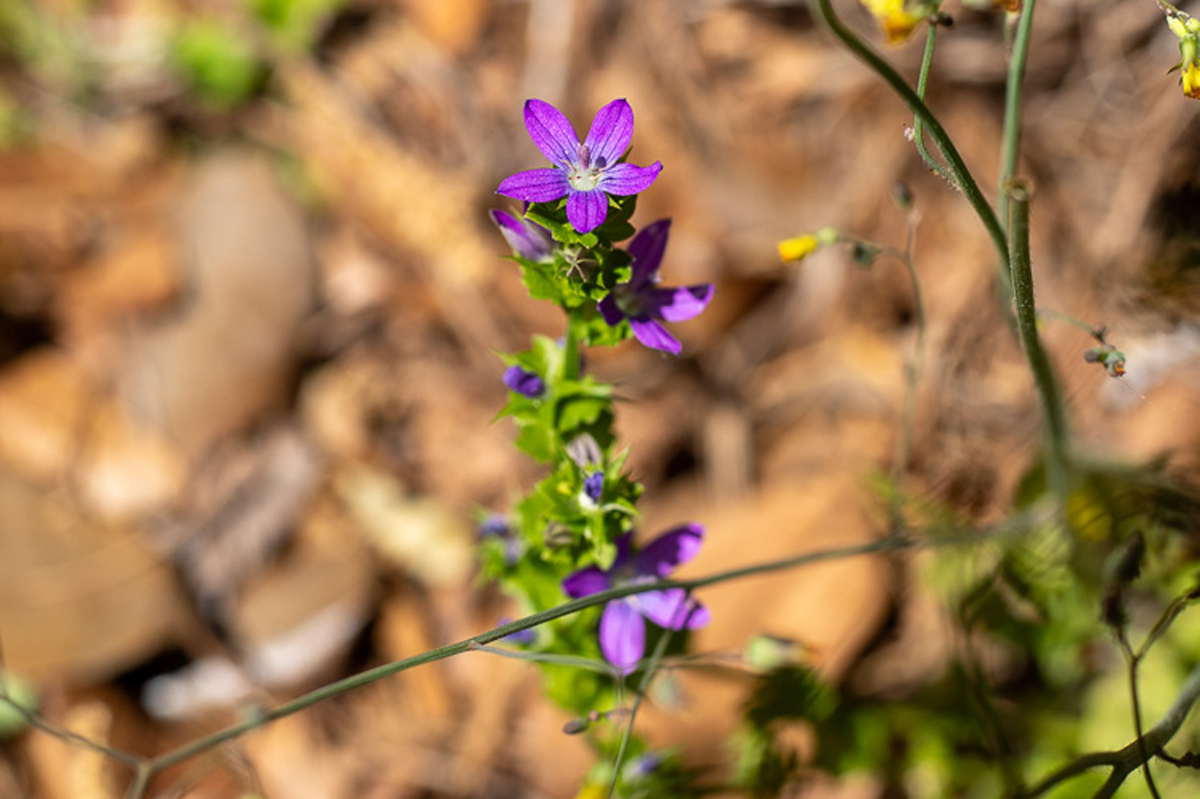
The delicate clasping Venus’s looking-glass is a lovely, widespread native herb in the Upstate and across North America. Named for the Roman goddess of love and beauty, this graceful flower has pretty bluish to purple petals and heart-shaped, alternating leaves that appear to “clasp” or fuse around the stem.
It grows upright to about 1-2 feet and enjoys dry and sandy or clay soil. It does well in gardens with some shade, on roadsides, in prairies, and along rocky outcrops, and its little flowers attract small bees, flies, butterflies, and moths.
If you’re working on a cottage garden, then this annual wildflower would make a great addition. In late spring to mid-summer, collect the small, slightly flat seeds that are said to resemble a hand mirror or “looking glass,” or let the flower self-seed and return in the same spot next year.
Carolina cranesbill
(Geranium carolinianum)
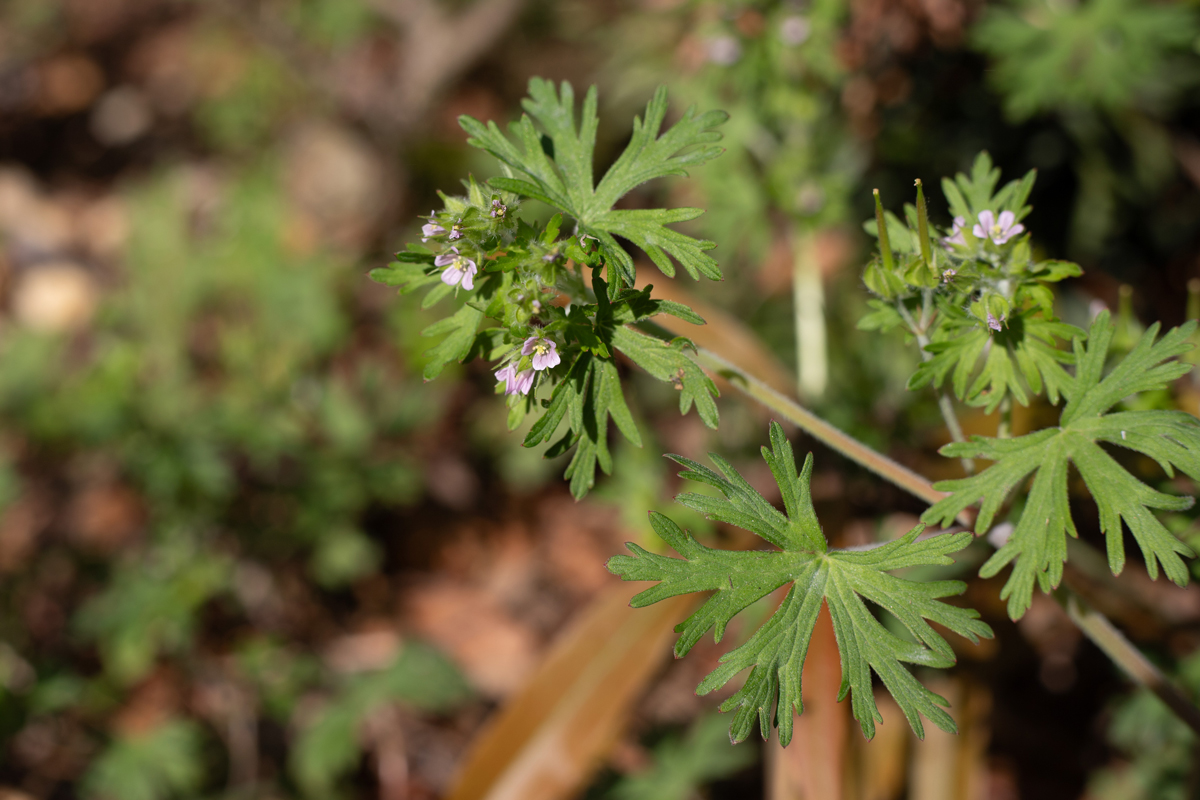
A great early-season nectar source for local pollinators, the Carolina cranesbill (or Carolina geranium) is a native, annual herb that often pops up in disturbed areas and urban gardens. Identify this wildflower by its leaves, which are sharply lobed in five to seven segments. The dainty flowers are small and light pink to white. It sprawls outward, but it stays under 12 inches tall and is perfect for a meadow-style garden.
These hardy plants thrive in poor soil, including the Upstate’s red clay, and they prefer full sun to part shade. Let it go to seed from May through July and discover why it takes the name “cranesbill” – the elongated seed pod resembles the bill of a crane. Local birds will enjoy the snack, too!
COMMON BLUE VIOLET
(Viola sororia)
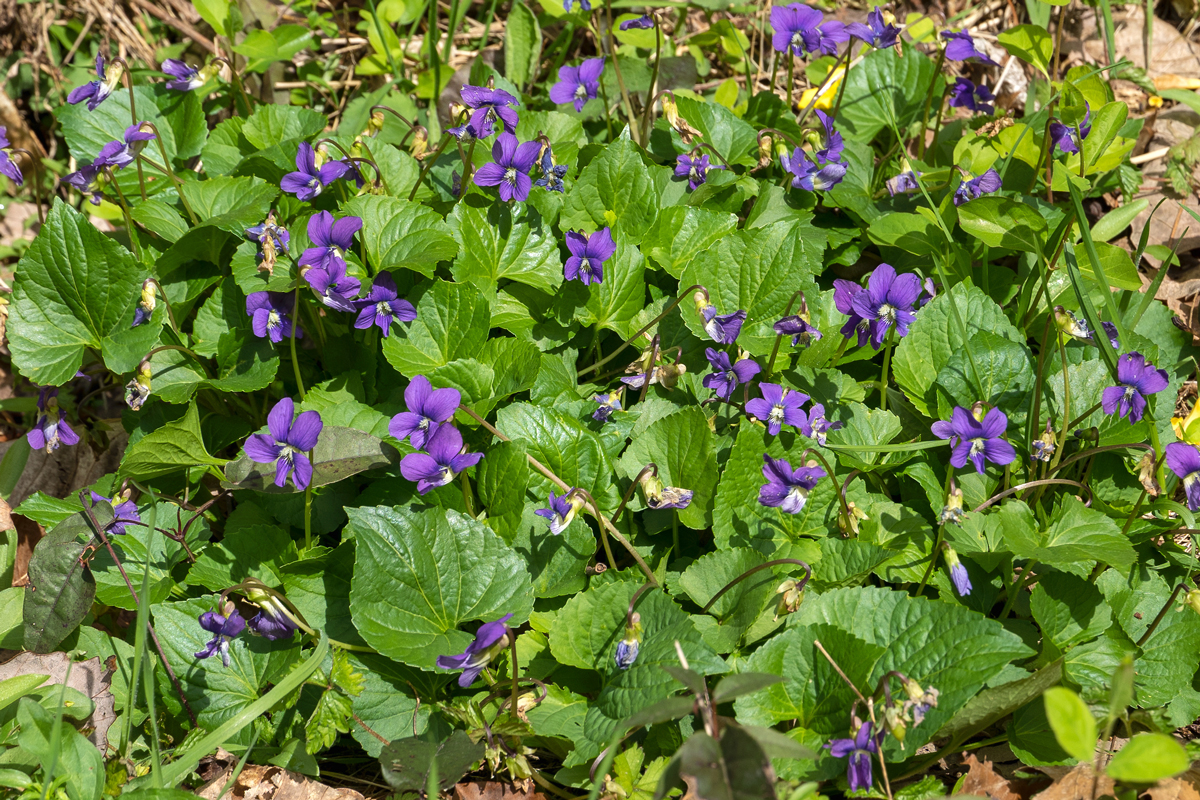
Often seen as a classic weed, most common blue violets are mowed, sprayed, or pulled before their blue, purple, or occasionally white blooms even have a chance to emerge. Those who eradicate them miss out on their important ecological role as a host plant for several fritillary butterfly species. Female fritillaries specifically seek out this hardy perennial to lay their eggs, and the caterpillars that hatch depend on the plant’s leaves for food and shelter through every stage of their development.
If you let these flowers stay, then their little five-petaled faces will bring early spring color and an important food source to your lawn or garden. These native alternatives to your classic pansies thrive in moist, rich soil and dappled sunlight in woodland gardens and rock gardens. Use them as borders or let them self-seed and spread naturally. The rabbits, caterpillars, butterflies, and native ground-nesting, solitary bees in our region are sure to discover your garden if it has common blue violets.
BLUE-EYED GRASS
(Sisyrinchium angustifolium)
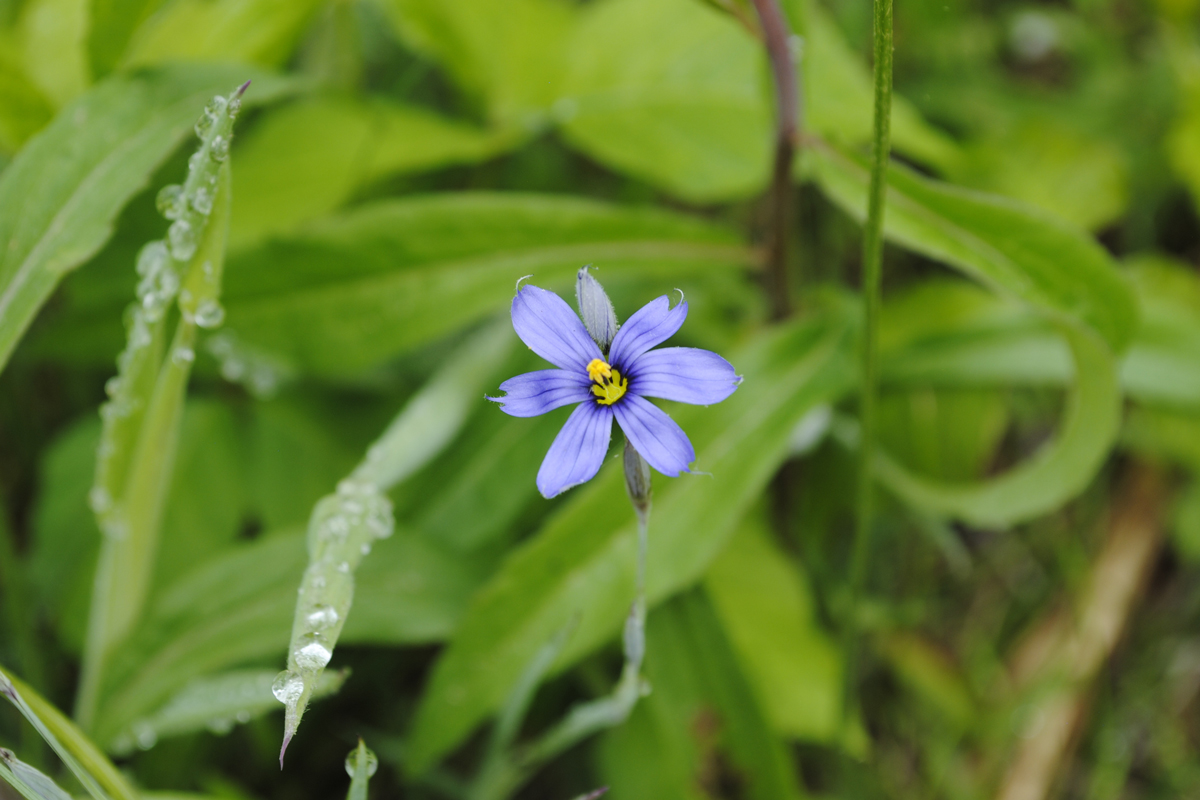
This delicate perennial grass in the iris family will trick you if you’re not watching closely for the blooms to emerge. Often mistaken for turfgrass, the spring-blooming blue-eyed grass puts out small, star-shaped bluish-purple flowers beginning in April.
When the blooms open with the early afternoon sun, their flowers draw bumblebees and sweat bees, azure butterflies, and other pollinators. As the sun sets, the blooms close tight for the night, and when they begin to go to seed in late summer, songbirds will happily feast on them. Blue-eyed grass flourishes in full sun and moist, well-draining soils, but it can also adapt to some dry conditions or light shade when established. Topping out at six to eight inches tall, they make great additions around pathways, in rock gardens, and in the front of your garden bed as a pretty clump-forming flowering grass.
littleleaf buttercup
(Ranunculus abortivus)
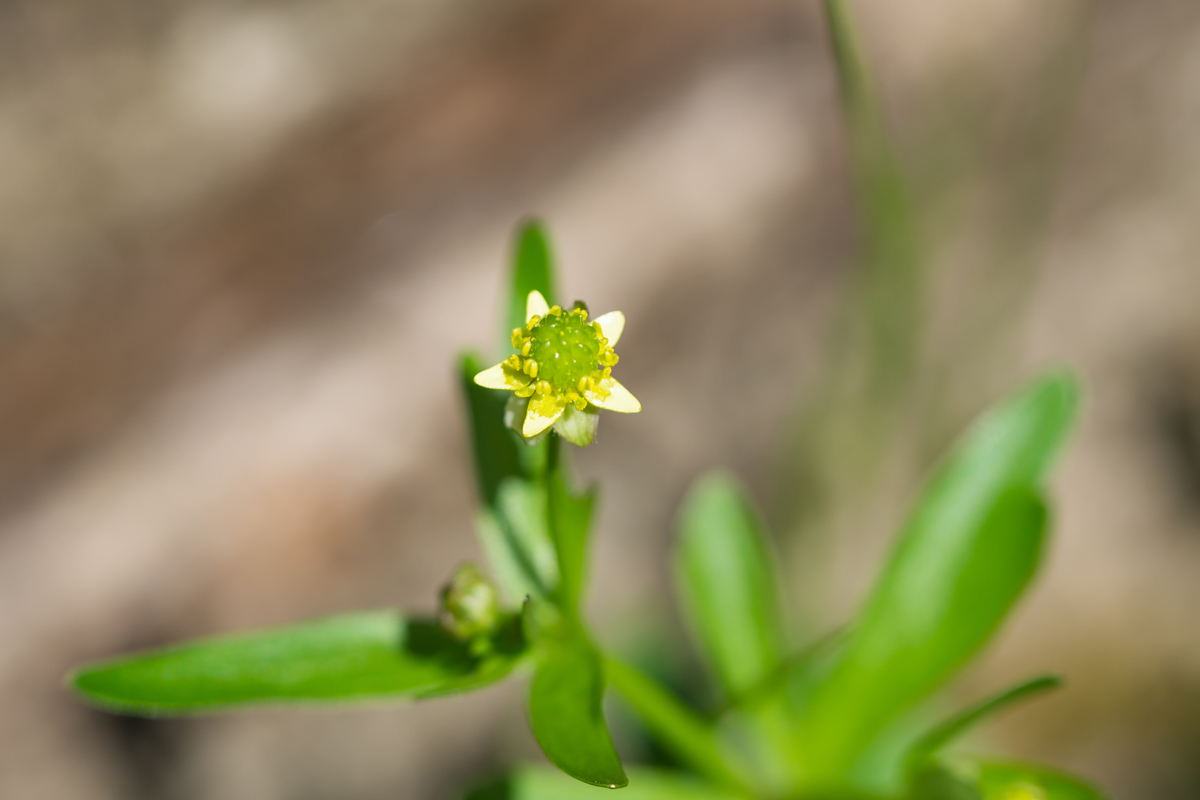
The littleleaf buttercup is an unassuming little native flower that’s widespread across the Upstate and North America. These small biennials often get overshadowed by showier native wildflowers, but they make great additions to your rain garden or anywhere the soil is compacted. They can tolerate drier conditions and are even found in degraded meadows and waste areas, but they will thrive in moist soil and shadier parts of your garden.
This is another early nectar and pollen source for sweat bees, hoverflies, and other pollinators, and a fall food source for chipmunks, voles, and ground-feeding birds. When they emerge in early spring, the leaves at the base are kidney-shaped, and as the stem elongates, narrower leaves branch off. Atop the stems sit many tiny yellow blooms with five petals that grow to roughly 6-24 inches tall. The plant was used medicinally by the Cherokee for sore throats, abscesses, and more. Curious about how other plants were used by the Upstate’s Indigenous people?
Check out the Native American Ethnobotany Database
VIRGINIA PLANTAIN
(Plantago virginica)
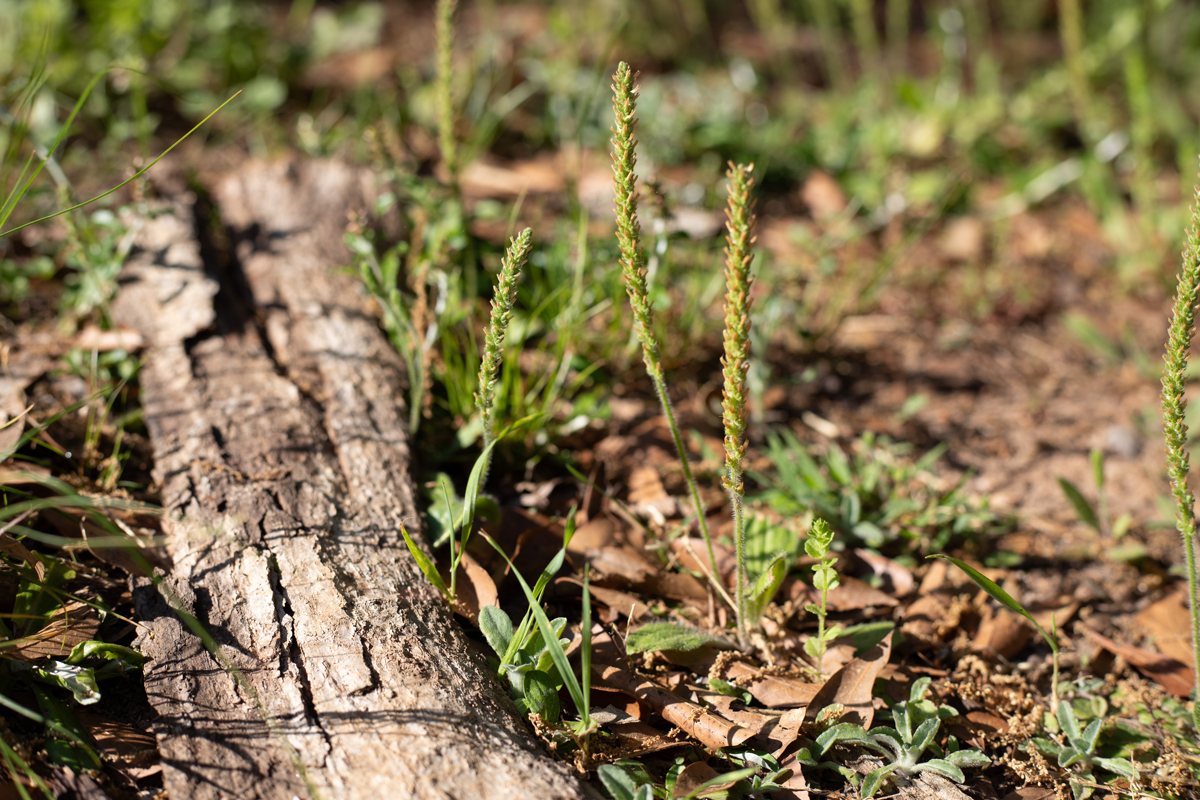
A low-growing winter annual, the Virginia plantain will give your garden winter greenery when most plants have died off. Starting in March, these herbs send up a flowering stalk from their compact rosette that can reach up to 12 inches. The whitish tan blooms aren’t quite as colorful as others on the list, but these plants make nice additions to dry, gravelly, or rocky areas that need vegetation.
It is hardy and will survive trampling by furry friends and children. It won’t prolifically self-seed either, so no need to worry about it dominating your lawn or garden. Just be sure to give it full sun, and once it’s established it requires very little watering or attention. You might even find a place for this edible plant in a kitchen garden. If you aren’t sold on trying the leaves and seeds yourself, then leave the Virginia plantain as a host plant for common buckeye butterflies (Junonia coenia), a nectar and pollen source for small bees, or as a seed source for small birds like sparrows and finches.
Want to keep learning about how these locally adapted wildflowers co-evolved with other unique flora and fauna in our region? Click here to check out what makes the Upstate's biodiversity so rare.
Greenville, SC
507 Pettigru Street
Greenville, SC 29601
Spartanburg, SC
900 S. Pine St, Ste 1B
Spartanburg, SC 29302