Request for Proposals: Upstate Forever seeks consultant for GIS mapping and modeling services. Apply by 5:00 p.m. ET on November 6, 2026. Learn more



Shaping Our Future
The findings from the Shaping Our Future Growth Alternatives Analysis, completed in June 2017, clarify the connections between local land use decisions and regional impacts and provide a tool for citizens and community leaders to have informed discussions about growth choices.
The analysis was conducted over the course of ten months and built on regional efforts that spanned a decade. Throughout 2018, four continuing education workshops were offered to elected and appointed officials and planning staff.
 Project Background
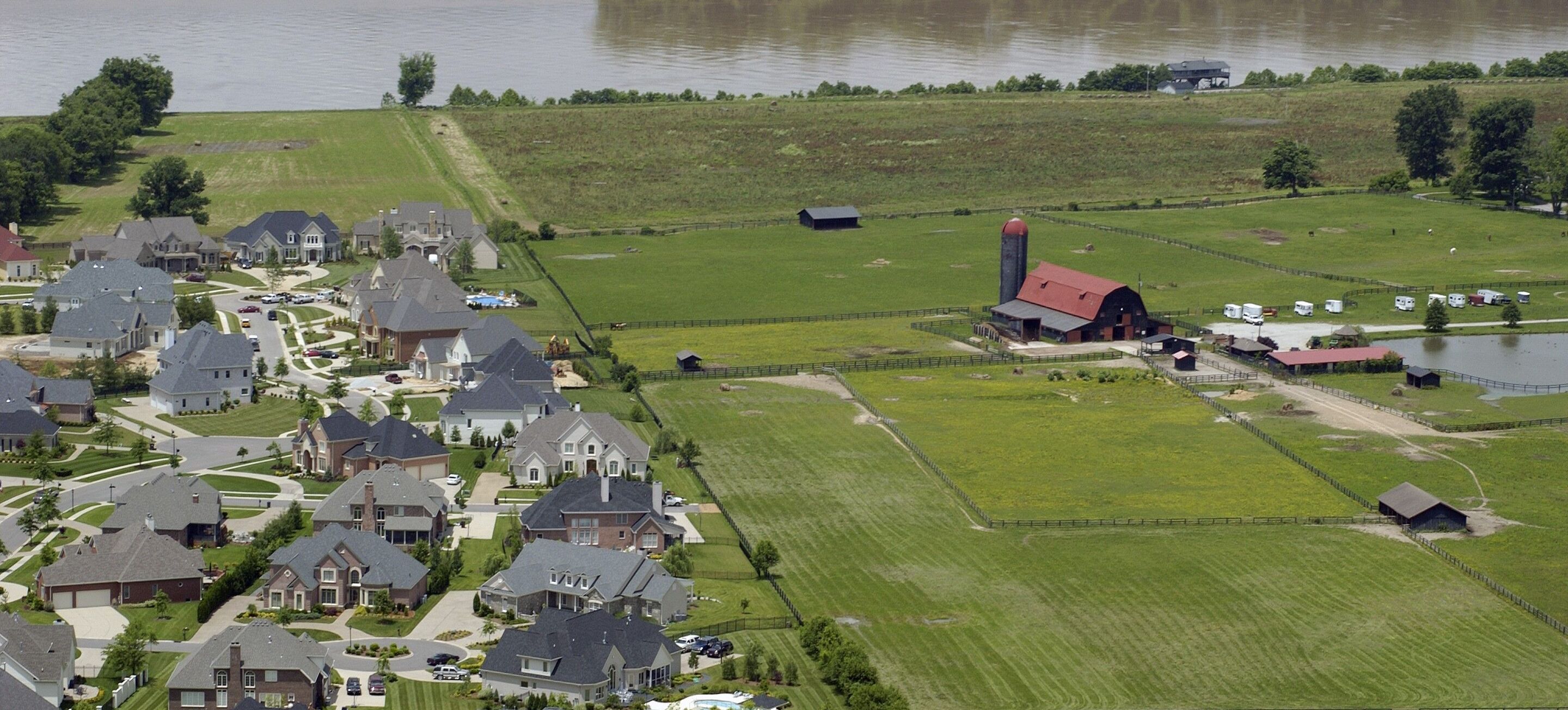
The 10-county Upstate region is growing. By 2035, our region’s population is projected to reach over 1,750,000 – an increase of 66% since 1990. The real issue, however, is how and where we are accommodating that growth. Unchecked development in rural areas – especially Greenville and Spartanburg counties – is rapidly consuming valuable farmlands, leveling forested areas, and straining infrastructure that cannot support it.
The Upstate Growth Alternatives Analysis used scenario planning tools — specifically CommunityViz software — to measure and evaluate the impacts of our current trend growth trajectory as well as three hypothetical alternatives. The study’s findings provide a valuable resource demonstrating the wide-ranging impacts of varying growth futures and recommendations for how local communities can work to achieve their visions for future growth.
The analysis was advanced by the Shaping Our Future Consortium — a partnership of Upstate Forever, Ten at the Top, and the Riley Institute at Furman University — and relied on the guidance of a broad-based steering committee representing the business sector, local governments and utilities, and community organizations; a technical advisory committee; several focus groups; and community feedback. The study built on previous projects carried out by Upstate Forever and other partnering organizations including the Upstate Growth Study, Upstate Reality Check and Upstate Shared Growth Vision and lessons learned during the 2015 Shaping Our Future Speaker Series.
The general study area for the growth alternatives analysis is the ten-county Upstate region of South Carolina. The Upstate is home to more than 1.4 million residents and is projected for an additional 300,000+ residents in the next 25 years.
Two technical reports were produced during the process to inform the final report: the Return-on-Investment Study and the Cost of Government Services Study.
This effort was made possible by the generous contributions of Hollingsworth Funds, Greater Greenville Association of Realtors, Ten at the Top, the Riley Institute at Furman University, New Belgium Brewing Company, Piedmont Natural Gas/Duke Energy and Upstate Forever.
Resources
Process & Timeline
The Shaping Our Future Growth Scenarios Analysis kicked off with its first steering committee meeting in August 2016. The ten-month study was conducted by a multi-disciplinary consultant team led by City Explained in conjunction with Stantec and Urban3. Scenario planning tools — specifically CommunityViz software — were used to evaluate the impacts of the Upstate’s trend growth trajectory as compared to three hypothetical alternatives.
The study built on previous projects carried out by Upstate Forever and other partnering organizations including the Upstate Growth Study, Upstate Reality Check, and the Upstate Shared Growth Vision and lessons learned during the 2015 Shaping Our Future Speaker Series.
Shaping our Future Forum
The preliminary results of the Growth Alternatives Analysis were presented by City Explained and Urban3 at a public forum hosted by Ten at the Top on May 25, 2017. Note — the final report, completed in June 2017, includes additional public safety cost information that was added to all four scenarios after the May 25th public presentation.
Steering and Technical Advisory Committees
The study was guided by a Steering Committee representing the business and economic development sector; local governments; utility providers and community organizations. A Technical Advisory Committee, made up primarily of local planners, provided key recommendations that influenced the study’s direction.
Steering Committee & Technical Advisory Committee Meeting Materials
Community engagement
Focus Group Series
The Shaping Our Future Growth Alternatives Analysis engaged stakeholders, elected officials, and the broader community. In late September 2016, several focus groups were convened at Greer City Hall to provide input regarding the effort. A special thanks to the City of Greer for sponsoring the series, a critical component of the initiative’s community engagement strategy.
In late October elected and appointed officials were asked to offer input on questions ranging from current growth trends to the opportunities and threats of future development over the next 25 years. The meeting was very interactive with officials responding with “clickers,” so consultants were able to showcase their aggregate responses in real time.
Regional Thought Leaders: Presentation | Notes
Utility Providers: Presentation | Notes
Commercial Development and Business Leaders: Presentation | Notes
Industrial Development: Presentation | Notes
Residential Development and the Lending Community: Presentation | Notes
Elected & Appointed Officials: Presentation
Building on Past Community Efforts
The Shaping Our Future Growth Alternatives Analysis built on previous community engagement efforts including the Upstate Reality Check and Upstate Shared Growth Vision. These efforts combined collected feedback from more than 15,000 Upstate residents, which were used to inform the Growth Alternatives Analysis.
Continuing Education Workshops
This training series, made possible through a partnership with Ten at the Top and Appalachian Council of Governments, was designed to engage elected and appointed officials and planning staff to explore strategies and tools to successfully manage growth and development in their local communities. The series stemmed from a shared desire among partners to integrate lessons learned and best practices into local decision-making processes across the Upstate.
Workshop themes drew from case studies featured in "Growth Choices, Challenges and Opportunities" (pages 37-87) in the Shaping Our Future Growth Alternatives Analysis.
Past Events
- January 11, 2018: "Preferred Development Patterns, Who Chooses?"
Keynote speaker: Carol Rhea, FAICP, founding partner Orion Planning + Design and past president of the American Planning Association.
Keynote Speakers: Don Oglesby, President Homes of Hope; Maurice McKenzie, Planning Director City of Anderson; and Chip Bentley, Deputy Director Appalachian Council of Governments.
Keynote Speaker: Jason Lawrence, Sr. Transportation Planner, Charlotte Area Transit, Charlotte, NC.
- October 18, 2018: "Exploring Missing Middle Housing"
Keynote Speaker: Karen Parolek of Opticos Design
Speaker Series 2015
Upstate Forever joined forces with Ten at the Top, Furman's Riley Institute, the Greater Greenville Association of Realtors, and the Upstate SC Alliance to present the 2015 Shaping Our Future Speaker Series. The purpose of the series was to help elected leaders better understand the impact of land use policies on transportation choices, municipal and county budgets, housing options, and the health of our air and water.
Speaker Series Highlights
Former Pennsylvania Governor Ed Rendell, the current co-chair of Building America’s Future, provided insight into why communities must overcome their failure to act and begin investing more wisely in robust transportation systems, including public transportation.
Greg DiLoreto from the American Society of Civil Engineers provided excellent insights into the consequences if we fail to invest in our infrastructure as well as examples of communities that have seen great benefits from local infrastructure investments.
Joe Minicozzi, real estate developer and principal at Urban3 consulting firm in Asheville, shared eye-opening data regarding the tax revenue production of varying development patterns and resulting impact on municipal and county budgets.
Economist Rob Dietz of the National Association of Homebuilders shared the results of a recent national poll regarding home-buying preferences with a focus on the millennial generation.
Greenwood City Manager Charlie Barrineau reported on the successful investments his city has made in its Uptown.
Ed McMahon, fellow at the Urban Land Institute, discussed the “economics of uniqueness” and how successful communities distinguish themselves from others through deliberate planning and policy. Other speakers were Jennifer Tinsley of the Lower Savannah Council of Governments and Mayor Frank Crenshaw of Pendleton.
- Watch Mr McMahon's complete presentation
- View PowerPoint
- See video highlights
- Access Ms. Tinsley's and Mayor Crenshaw's presentations
Jessica Sargent, Director of Conservation Economics from the Trust for Public Land, presented on The Economic Benefits of Open Space. Other speakers were Jason Armstrong of Patrick Square traditional neighborhood development in Clemson and Chris Jennings of the Spartanburg Convention and Visitors Bureau.
Greenville, SC
507 Pettigru Street
Greenville, SC 29601
Spartanburg, SC
900 S. Pine St, Ste 1B
Spartanburg, SC 29302